Legends about the City's Name
One legend says that the name Luninets comes from the village of Lunin. The village of Lunin existed long before Luninets. One of the villagers separated from his fellow villagers and settled where Luninets now stands. He built a household, a house, planted a garden, raised children, who later raised their own children.
Another legend goes back to even earlier times, when small principalities of Kievan Rus waged endless wars with the Mongol-Tatars. A small detachment of Russian warriors, returning from reconnaissance, stopped to rest on a hill and were killed in their sleep by the Mongol-Tatars. The hill was called "Sleepy Hill" by the locals. Later, a watch post was established on this hill, and watchmen lit fires to warn of enemies. The fires on Sleepy Hill "lunaed," so the settlement was called Lunki — from the word "luna" (to shine).
The last legend tells of a woman whose husband died young, her son died in one of many wars, and her daughter-in-law died leaving a newborn grandson. The priest refused to baptize the child as the woman could not pay. By day she cared for the child, by night she worked for wealthy neighbors, so she was called Lunya (a local word for owl). The grandson also died, and since unbaptized children could not be buried in the cemetery, the unfortunate woman buried him on a hill near her home. Locals said, "Here lies Luninets," meaning Lunin's grandson.
Luninets of My Childhood
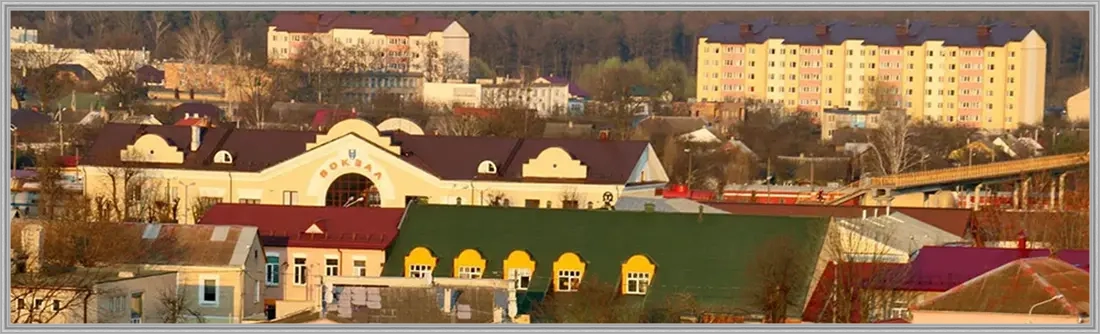
Luninets of my childhood remains in memory with narrow green streets paved with cobblestones, dating back to the Polish times. The entire town was a continuous garden. That is why I love spring so much from childhood; every spring reminds me of the spring of my life.
Cobblestone streets in the central part of Luninets appeared in the early 20th century, later than in other large cities. The cobblestones were attractive hexagons of granite pieces "cemented" together. It is said to be the invention of the Pinsk engineer Trilinsky.


