RU | EN
Panorama of Israel overlooking the Western Wall

Israel — State Structure

State Structure

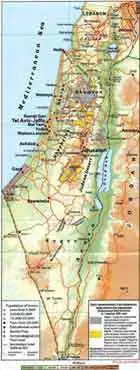
Map of Israel

The State of Israel is a parliamentary republic established on May 14, 1948, in accordance with the United Nations Partition Plan for Palestine. The supreme legislative body is the Knesset, a unicameral parliament consisting of 120 members. The Knesset elects the head of state by secret ballot for a five-year term. The central executive body is the Cabinet of Ministers, headed by the Prime Minister. Local government is exercised by municipalities in cities, local councils in towns and villages, and regional councils governing groups of smaller settlements.

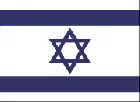
Flag of Israel

State flag of Israel with a six-pointed star

The flag of Israel is a white banner crossed by two longitudinal blue stripes. It resembles a tallit (tallit katan) — an ancient Jewish prayer shawl with fringes at the corners and a round opening so it can be worn over the head. Religious Jews wore the tallit under their outer garments. According to the flag's creators, the blue symbolizes the sky, while the white represents the purity of religious ideals. In the center of the flag is the ancient Star of David — a six-pointed star called the "Magen David". It is an interlacing of two equilateral triangles: one pointing downward symbolizing "water", and the other pointing upward symbolizing "fire". It was adopted as the official state symbol on October 28, 1949.

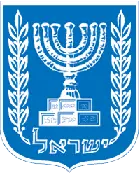
Coat of Arms of Israel

State coat of arms of Israel depicting a menorah

The state coat of arms of Israel features a seven-branched candelabrum (menorah) flanked by two olive branches (a symbol of peace), rising from the name of the state written in Hebrew below. The golden seven-branched candelabrum was one of the main ritual objects in the First Temple in Jerusalem during the reign of King Solomon. The coat of arms was adopted by the Provisional State Council on February 10, 1949.